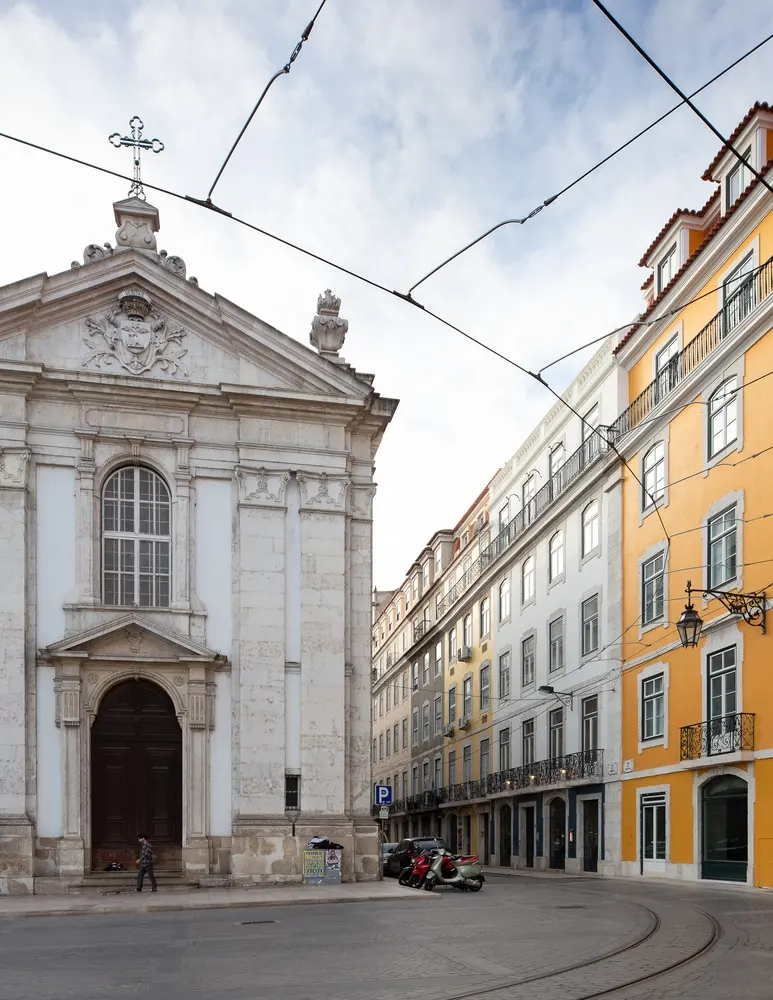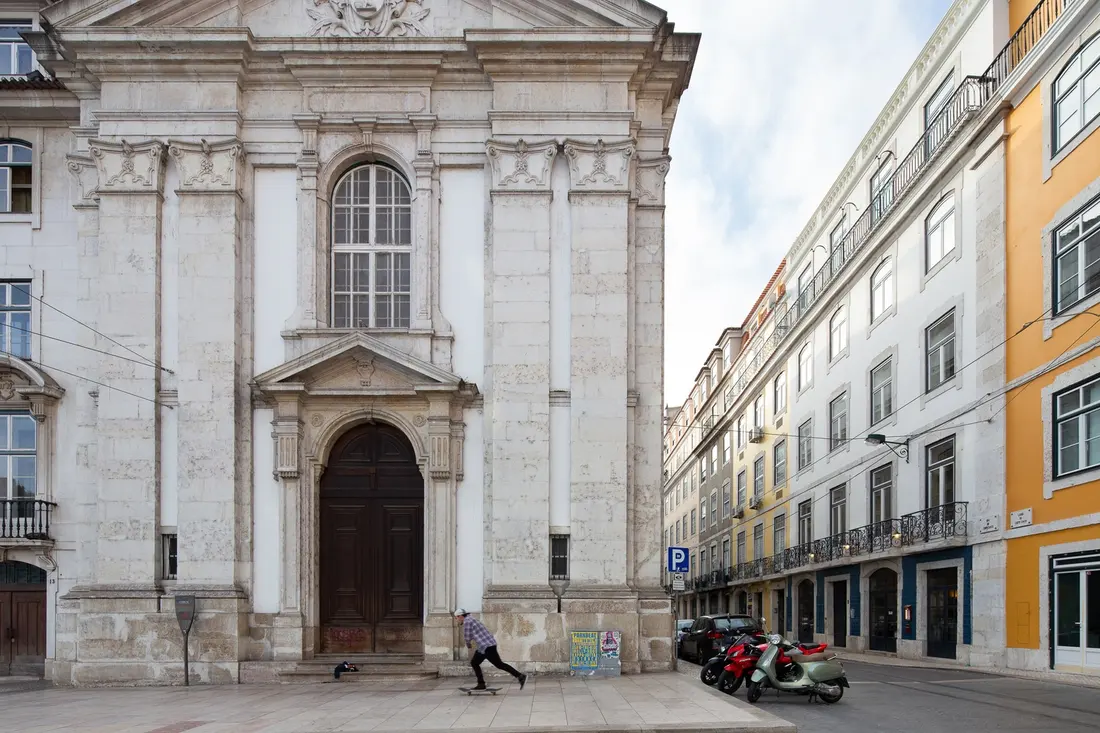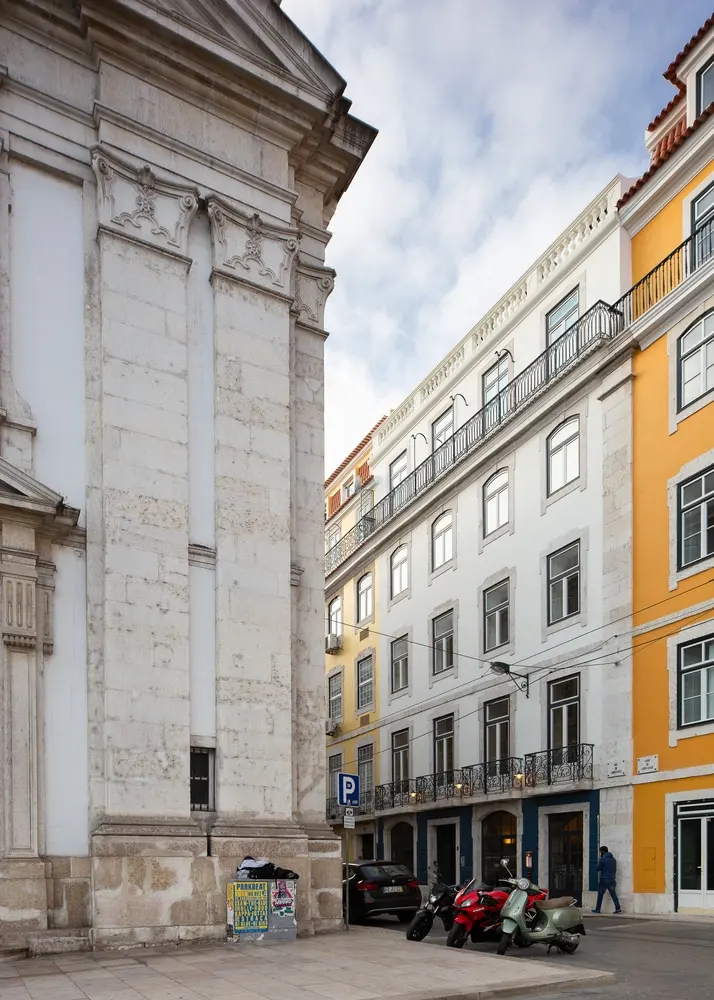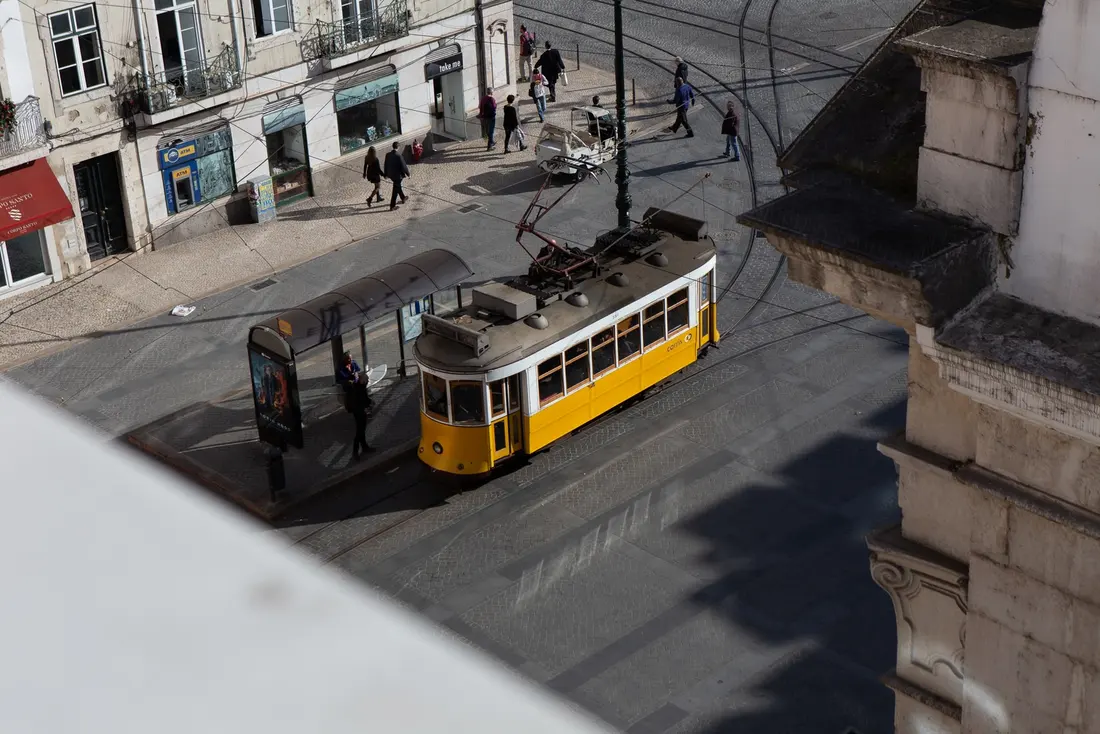
The building in question is accessed via two streets at different levels, with the main entrance on Rua do Corpo Santo and the secondary entrance on Rua do Ferragial, which is 7 meters higher. This difference results in two semi-underground floors, below the level of Rua do Corpo Santo.
The original construction dates back to the 18th century and fits perfectly into Lisbon's urban network.
The building has six floors, the first two of which are dedicated to commerce and the remaining four to housing.
At the shop level, the first two floors have been restored with flooring made of large stone slabs, as well as a vaulted edge supported by pillars, reinforced by transverse arches, which are a typical feature of Pombaline buildings of that period.
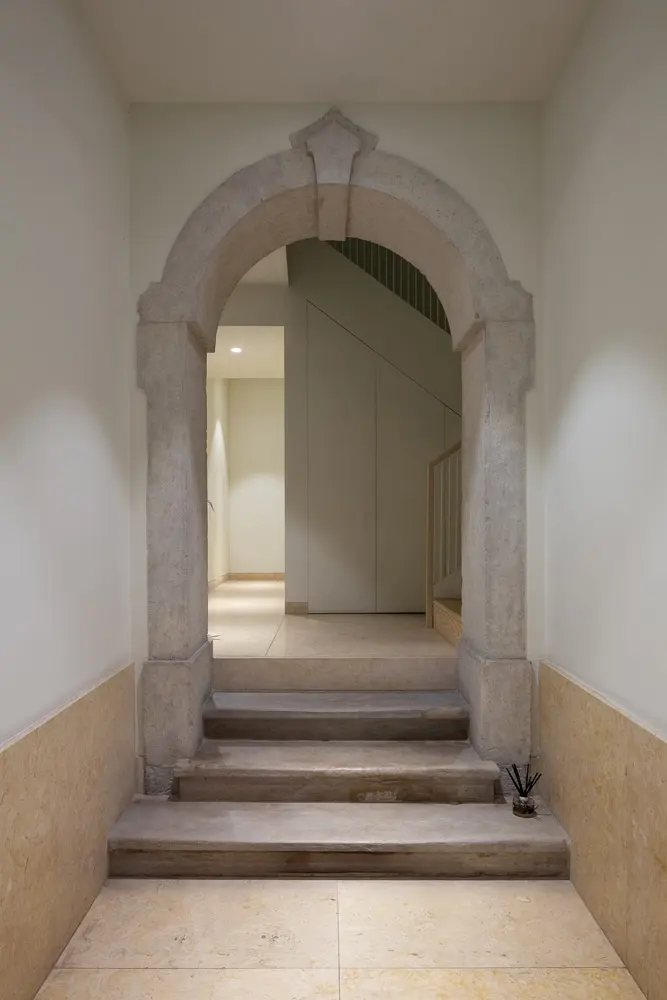
The main entrance on Rua do Corpo Santo has also been maintained and restored with a stone atrium.
Each floor of the apartment gives rise to two dwellings, as is believed to be the initial layout of the building.
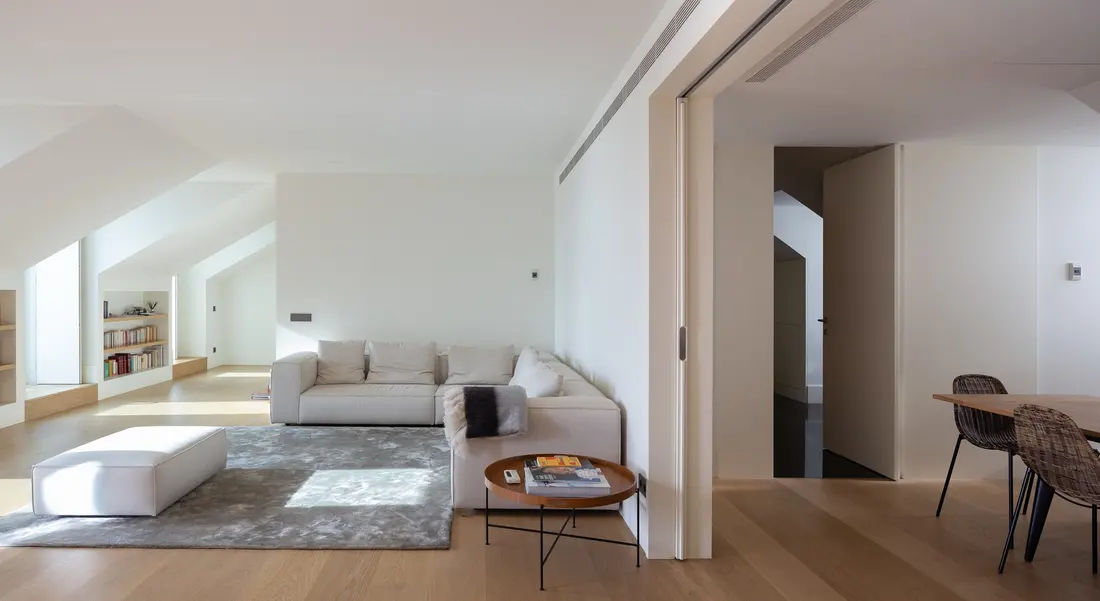
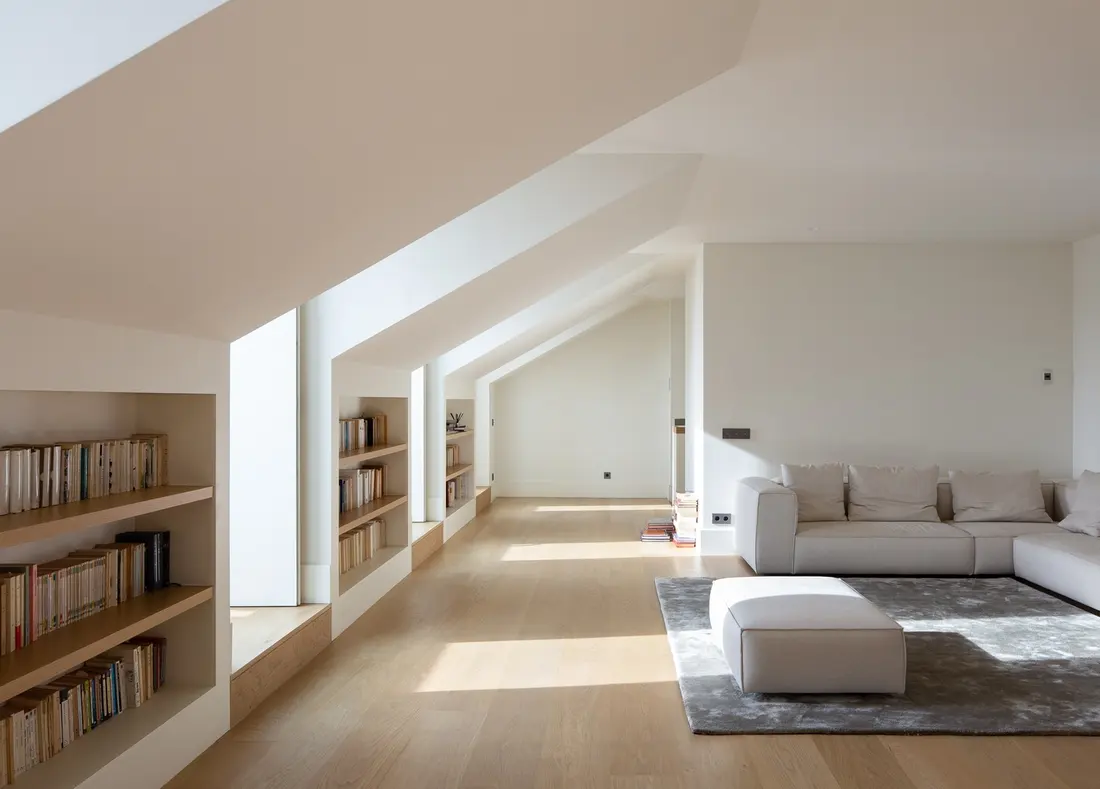
Only the top floor (attic) has been altered, now organized as a duplex apartment.
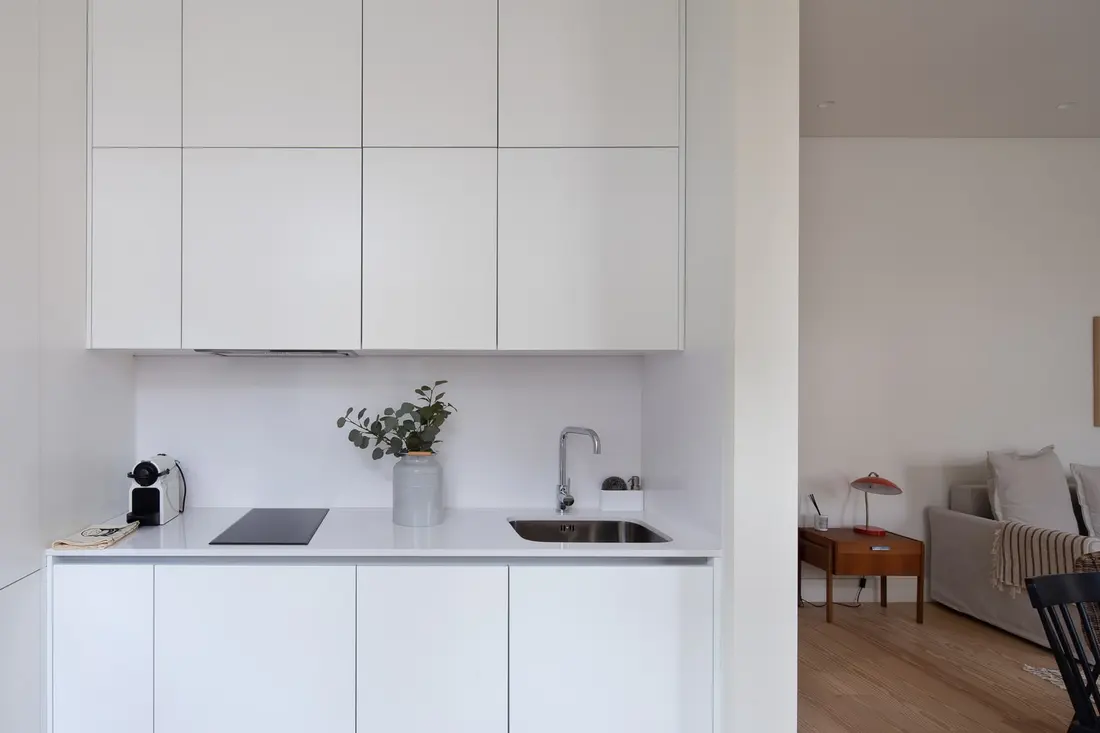
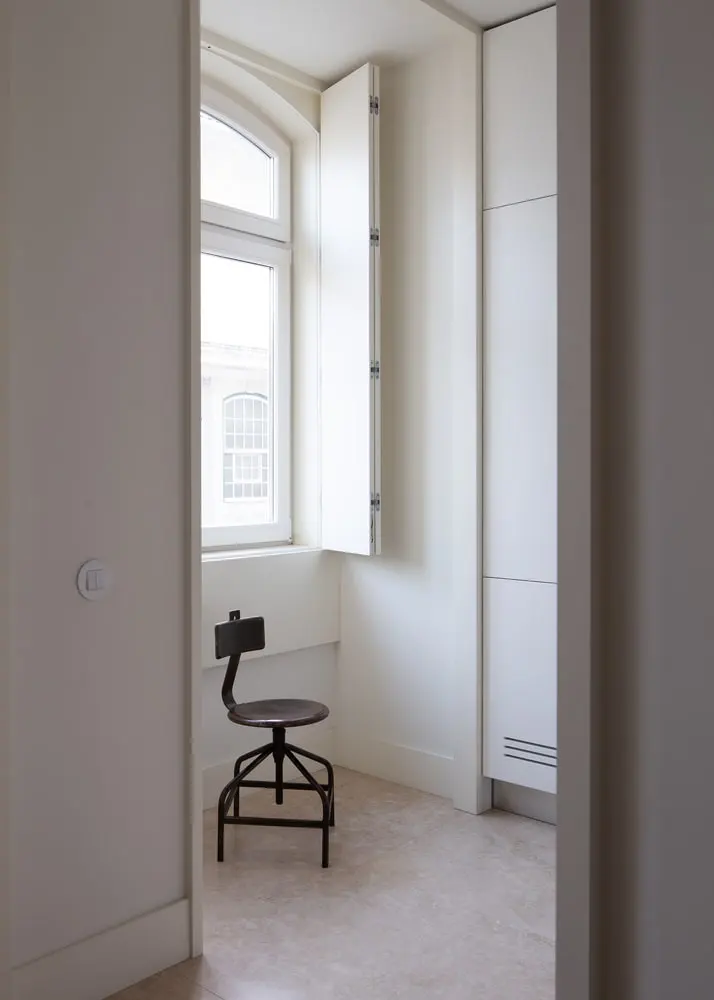
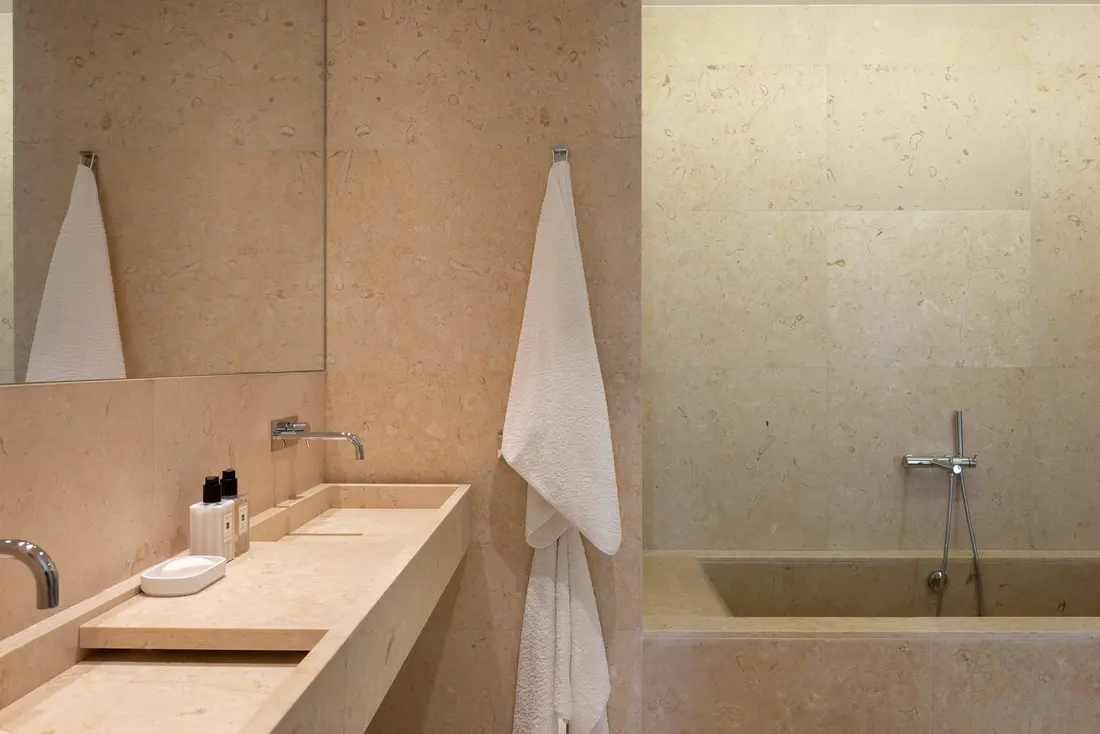
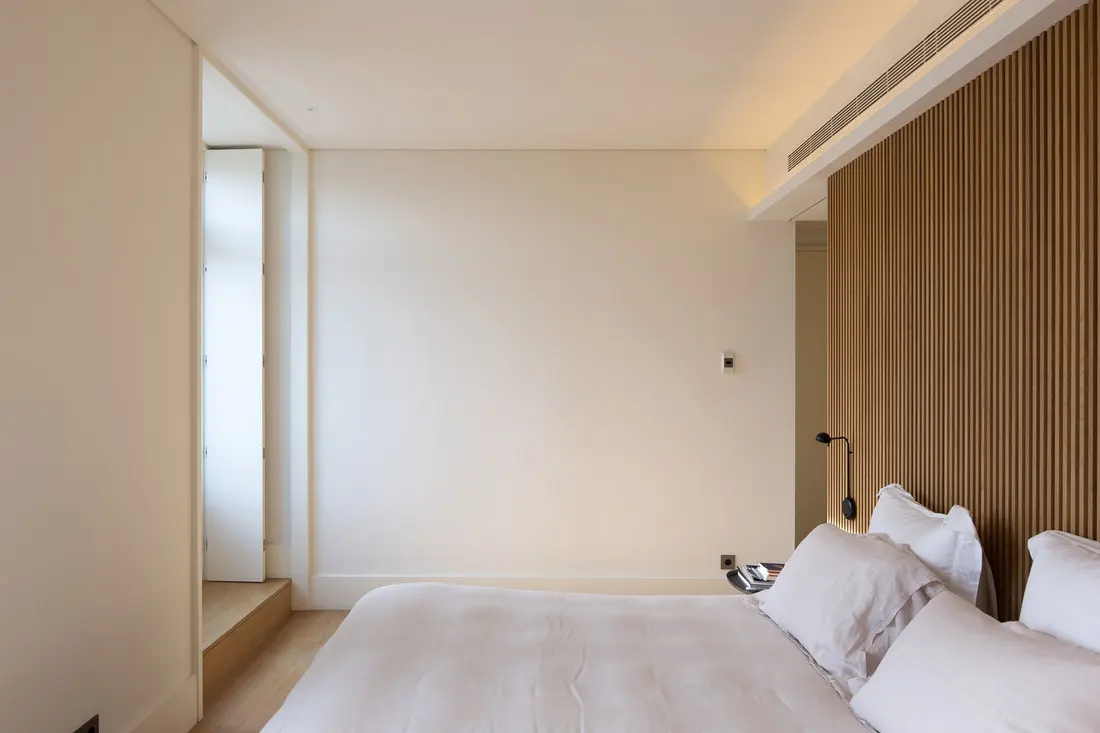
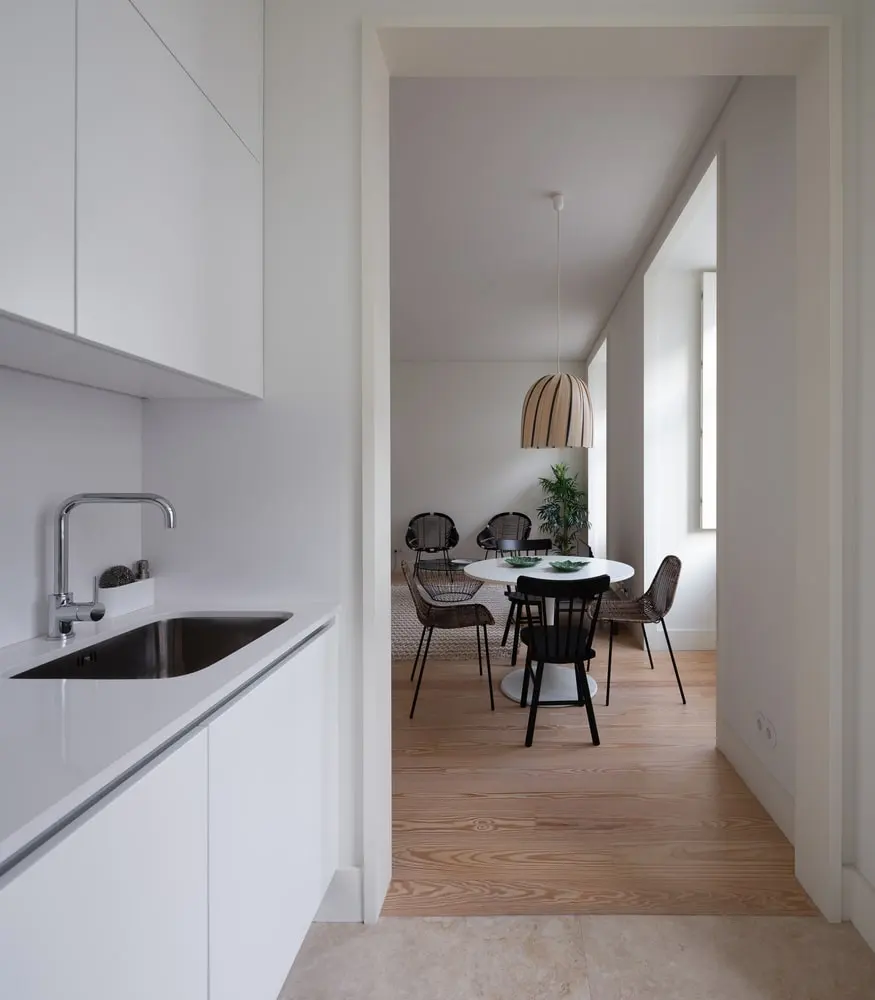
Inside, the houses are characterized by great attention to detail, creating warm, cozy, and contemporary environments with the use of stone and wood in their natural state.
The roof has been maintained in its original form but has been repositioned to increase the living area and create a small terrace with stunning views over the Tagus River.
The building's facades have been restored, preserving the original window frames, stone masonry, and metal railings, which together maintain the architectural foundation of Pombaline architecture.